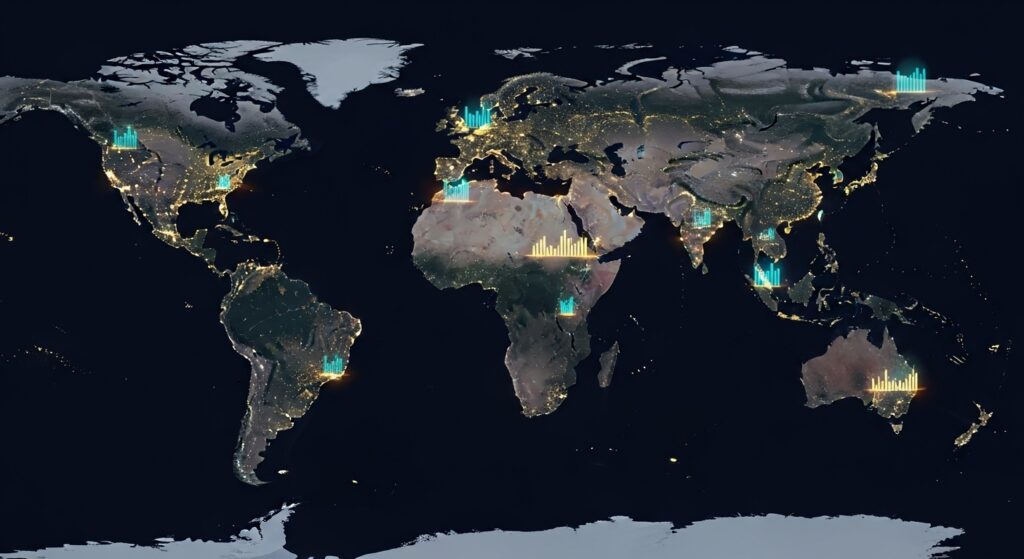
The Rise of Emerging Economies in Asia and Africa: A Global Economic Power Shift
The rise of emerging economies in Asia and Africa is transforming the structure of the global economy. For decades, economic power was concentrated in North America and Western Europe. Today, a significant shift is underway as emerging economies in Asia and Africa accelerate growth, expand global influence, and reshape international trade patterns.
This transformation is not temporary. It reflects long-term structural changes in population dynamics, industrialization, digital innovation, and regional cooperation.

Understanding the Rise of Emerging Economies in Asia and Africa.
Emerging economies are nations transitioning from low-income or developing status toward more industrialized and market-oriented systems. The rise of emerging economies in Asia and Africa is characterized by:
- Rapid GDP expansion
- Expanding middle-class populations
- Infrastructure modernization
- Growing participation in global trade
- Increased foreign direct investment
Countries such as China, India, Indonesia, Vietnam, Nigeria, Kenya, and South Africa are central to this economic shift.

Why Asia Is Leading the Emerging Economy Expansion.
The rise of emerging economies in Asia has been especially remarkable over the past 30 years. Several structural factors explain this momentum.
1. Demographic Strength and Labor Markets
Asia holds a significant portion of the global workforce. Large populations in India and Southeast Asia provide a steady supply of labor and an expanding consumer base.
2. Manufacturing and Global Supply Chains
Asia became the backbone of global manufacturing. Regional cooperation through organizations like the Association of Southeast Asian Nations has strengthened trade integration and supply chain efficiency.
3. Digital Transformation and Innovation
From fintech ecosystems to e-commerce expansion, Asia has embraced digitalization rapidly. Technology adoption supports productivity and entrepreneurial growth.
4. Investment in Infrastructure
Massive infrastructure projects—ports, railways, energy grids—have increased production capacity and international trade competitiveness.
The rise of emerging economies in Asia demonstrates how policy reforms combined with industrial planning can accelerate long-term economic transformation.

Africa: The Next Frontier in the Rise of Emerging Economies.
The rise of emerging economies in Africa is increasingly attracting global attention. Although development levels vary across countries, several strong indicators point toward sustained long-term growth.
1. Youthful Population Advantage
Africa has one of the youngest populations in the world. A young demographic structure supports labor force expansion and future consumer market growth.
2. Regional Trade Integration
The establishment of the African Continental Free Trade Area aims to create a unified continental market, reduce trade barriers, and boost intra-African commerce.
3. Resource Potential and Economic Diversification
Africa holds vast reserves of minerals, energy resources, and agricultural land. Increasing diversification into manufacturing, technology, and services is strengthening economic resilience.
4. Mobile Technology Leapfrogging
Digital financial solutions in East Africa demonstrate how emerging economies can adopt advanced systems without legacy infrastructure constraints.
The rise of emerging economies in Africa represents a structural opportunity that could redefine global investment patterns over the next decades.

Global Implications of the Rise of Emerging Economies in Asia and Africa.
The rise of emerging economies in Asia and Africa is reshaping the global balance of power in several ways:
🌐 1. Shifting Trade Patterns
Global trade routes increasingly connect Asian and African markets with each other and with Western economies.
💰 2. Diversified Investment Flows
International investors are reallocating capital toward high-growth developing markets.
🏦 3. Institutional Focus
Organizations such as the World Bank and the International Monetary Fund monitor these economies closely due to their growing influence on global financial stability.
🌍 4. Emergence of a Multipolar Economy
Instead of a single dominant economic center, global power is becoming more distributed.
The rise of emerging economies in Asia and Africa signals the beginning of a more interconnected and balanced global system.

Challenges Facing Emerging Economies
Despite impressive progress, the rise of emerging economies in Asia and Africa also faces obstacles:
- Infrastructure financing gaps
- Political and regulatory instability in some regions
- Climate change vulnerabilities
- Public debt management concerns
- Income inequality
Long-term success depends on sustainable policy planning, education investment, institutional transparency, and economic diversification.

The Future Outlook.
Looking ahead, the rise of emerging economies in Asia and Africa is expected to continue influencing:
- Global trade agreements
- Digital economy expansion
- Energy transitions
- International investment flows
For policymakers, investors, and global observers, understanding this transformation is critical. The global economy of the 21st century will not be shaped by one region alone but by dynamic interaction between advanced and emerging markets.
The rise of emerging economies in Asia and Africa is not merely a development trend—it is a fundamental restructuring of global economic power.